
Hey guys, it’s Daisy! Welcome back to the blog. You already know I am absolutely obsessed with everything Reformation. Whether I’m doing an unboxing video or just living in my favorite floral midi dresses, they are my go-to for effortless, cool-girl style. (By the way, if you’re like me and always hunting for a good deal to snag these pieces on a budget, you have to check out my ultimate Reformation sale guide—I update it constantly with the best discounts!)
Today, I’m stepping away from the outfit try-ons for a second to talk about some huge news in the eco-fashion world that actually impacts how we shop. Grab a matcha, and let’s get into it!
📌 The Tea: Reformation’s New Chicago Stores
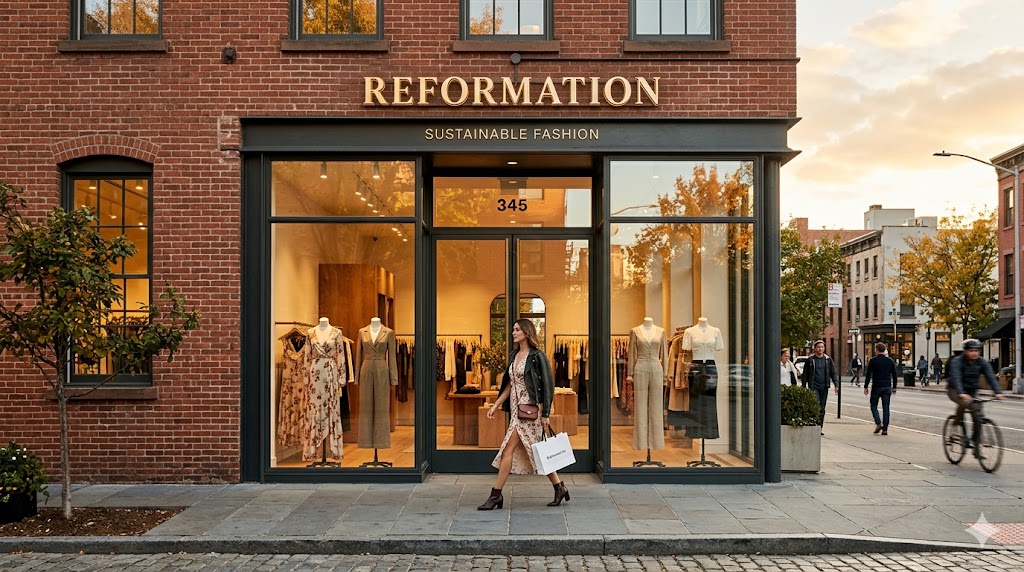
According to a recent report by Block Club Chicago, our favorite sustainable fashion brand is opening two brand new stores in Chicago this May 2026! They are setting up shop in the Southport Corridor and Fulton Market. It’s so wild to think about how Ref started as an online-only indie darling, and now they are aggressively expanding their physical retail footprint. Going from pure e-commerce to a true omnichannel powerhouse is a massive move.
🔑 The Fast Facts: Why This Matters
- Southport Corridor Spot: This is a high-end residential neighborhood in Chicago. Ref is totally targeting high-income, eco-conscious shoppers here (we’re talking median household incomes of $95k+).
- Fulton Market Spot: This area is a bustling tech and creative hub (home to Google and McDonald’s HQs). It’s packed with young professionals who want to look chic at work and happy hour.
- The Omnichannel Glow-Up: Ref started strictly online in 2009, opened their first physical store in 2016, and now in 2026, they boast over 30 locations across the US!
- Leading the Pack: According to Business of Fashion’s 2025 data, Reformation is pulling in an estimated $300 million in annual sales. They are officially one of the highest-valued privately owned sustainable brands out there.
🔍 The Big Picture: Eco-Fashion is Booming
To give you some context, McKinsey reported that the global sustainable fashion market hit around $8 billion in 2025. It’s growing at a rate of about 10% per year, which totally crushes the 3% growth rate of the traditional fashion market. Post-pandemic, we are all kind of craving that “IRL” experience again, right? The NRF 2025 retail report showed that physical store sales for fashion grew by 8% year-over-year, outpacing e-commerce growth (5%).
Chicago is the third-largest consumer market in the US, right behind NYC and LA. Ref choosing two major hotspots in Chicago shows just how confident they are in the Midwest’s appetite for sustainable style.
📊 My Insider Insights
- Mainstream Era: Sustainable fashion isn’t just a “niche” thing anymore. A 2025 Nielsen survey found that 73% of millennials are willing to pay a premium for eco-friendly products (up from just 45% in 2015!).
- The In-Store Experience: Ref stores aren’t just for buying clothes; they are an experience. You get to see the sustainable materials up close, scan carbon footprint tags, and learn about their recycling programs. It builds so much brand trust.
- Genius Locations: Pairing a high-income residential area with a buzzing tech district ensures they capture completely different vibes of shoppers.
- The Competition: They are definitely facing pressure from brands like Everlane, Allbirds, and Patagonia. But honestly? Ref just has that perfect, unique balance of “sexy/trendy” and “sustainable” that is hard to beat.
💼 The Business Scoop (Impact Analysis)
For my fellow fashion-business nerds, here is a quick breakdown of what this expansion actually means for the brand:
🎯 By the Numbers
- $8 Billion: Global sustainable fashion market size in 2025 (Source: McKinsey)
- 73%: Millennials willing to pay extra for sustainability, compared to 45% a decade ago (Source: Nielsen 2025)
- $300 Million: Ref’s estimated annual sales (Source: Business of Fashion 2025)
📈 What’s Next? (Trend Predictions)
Short-term (2026): These Chicago stores are basically a test to see how much the Midwest embraces sustainable fashion IRL. If it’s a hit, expect them to pop up in more tier-2 and tier-3 cities soon.
Long-term (2027-2028): Having a physical store will become the standard for eco-brands. By 2028, we could see 50+ Reformation locations across the US. And if they keep this momentum up? An IPO might be on the horizon (just look at Allbirds, trading under ALLB on NASDAQ!).
🌐 Who Is Shopping IRL?
The Target Shopper: Urban women aged 25-40, making $50k-$100k a year, who care deeply about both trends and the planet. They shop 1-2 times a week and don’t mind paying a 10-20% premium for something eco-friendly.
The Vibe/Scenario: A quick lunch-break retail therapy session (Fulton Market), a leisurely weekend stroll with the girls (Southport Corridor), or desperately hunting for a guilt-free wedding guest dress.
The Solution: Ref gives us the ultimate “sustainable fashion experience.” You can scan tags to see the exact carbon footprint, water usage, and material sourcing of the dress you’re holding. It perfectly blends the convenience of online shopping with the tactile joy of an in-store fitting room.
❓ You Asked, I Answered (FAQ)
Q1: Is Reformation *actually* sustainable? Daisy says: Partially, yes. They use over 30% recycled materials (like recycled cotton and poly) and publish a very transparent annual sustainability report. However, a 2025 Greenpeace report noted that they still produce a massive volume of new clothes (an estimated 10 million pieces annually). So, it’s best to view them as a “relatively sustainable” choice rather than a 100% perfect one.
Q2: Reformation vs. Everlane — which is better? Daisy says: It totally depends on your style! Ref is your go-to for trendy, feminine pieces (think gorgeous dresses and skirts ranging from $100-$300). Everlane is the king of elevated basics (tees, denim, outerwear for $80-$200). Sustainability-wise, Ref leans heavy into carbon footprint data, while Everlane focuses on “radical transparency” in pricing. Both are solid choices in the eco-space.
Q3: Will Reformation ever open stores in China? Daisy says: Right now, there are no official plans. You can definitely order from their website with direct shipping to China (shipping is around $20), but physical stores are currently limited to North America, Europe, and Australia. According to BOF, they are prioritizing English-speaking markets first, so we probably won’t see an Asian expansion until after 2028.
Let me know in the comments if you guys plan on visiting the new Chicago stores! And seriously, don’t sleep on my Reformation sale guide if you want to shop these sustainable looks for less. xx Daisy